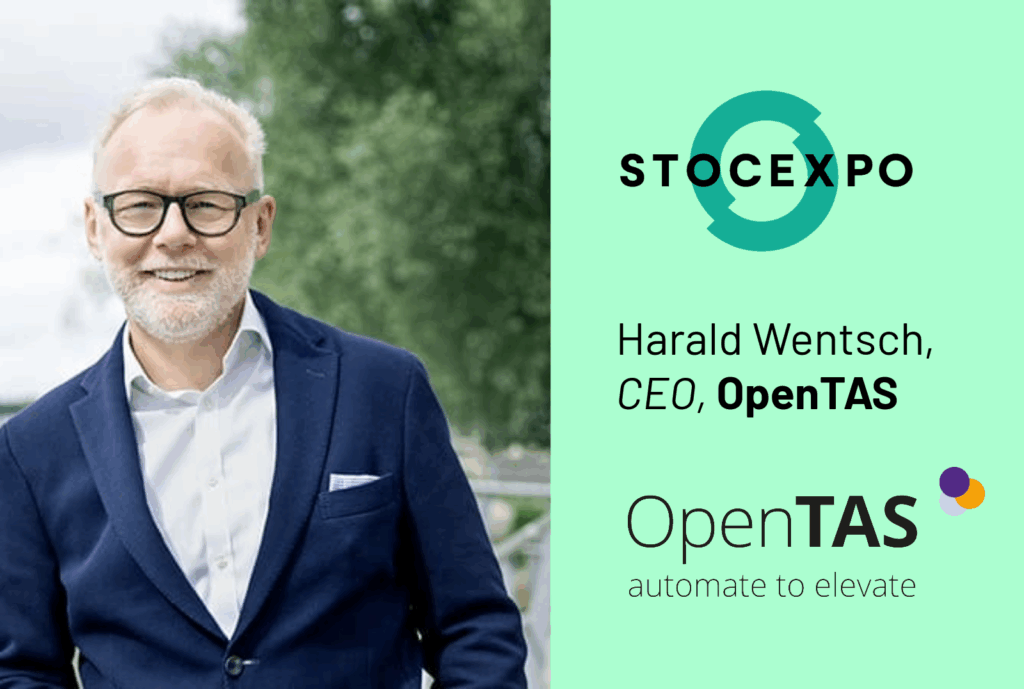
Previously part of Implico, OpenTAS Group struck out on its own as a terminal management solutions specialist in 2024. What was the reasoning behind the split and what effect did it have on your strategic positioning?
Let me start by saying we’ve had international expansion in mind from the start. Since I joined the company in 2023, we’ve added end-to-end consulting to our core portfolio, allowing us to assist companies in the energy and chemical markets with their digital transformation. Terminal management is our bread and butter, and our desire to tailor our services to the expectations of our customers and the market is what prompted us to break off from Implico. Hence, the OpenTAS Group was born.
The fact is that the industry for energy and chemicals is evolving, and it’s asking serious questions of the technology currently on offer. However, with the right setup – I’m talking software standardization, AI, IT/OT convergence, and the like – tank terminal enterprises can turn this evolution into growth on an international scale. This is where we enter the picture: having invested heavily in software solutions and services, we’re well positioned to meet every need.
As a leading supplier of digital supply chain solutions, what do you believe are the main challenges faced by the industry?
Good question. Our industry is tasked with safeguarding the security of supply – which is no trivial task. That calls for innovation and the flexibility to adapt to changing market conditions. On a broader level, it’s about acting today while planning for tomorrow. Look at any news source and the challenges are clear: geopolitics is unstable, alternative energies are gaining traction, the new generation of workers has very different priorities, and infrastructure is more vulnerable than ever. Still, we can tackle these issues head on by taking greater control of business processes and channeling fossil fuel revenue into new energy-related opportunities to reach new markets and future-proof the industry. And it starts with digitalization.
What role do regional differences play and how does OpenTAS approach them?
As I said, the landscape is changing – and that applies both globally and regionally. Whether Europe, North America, MEA, or South America, each region has its own specific dynamics. This means that although the global supply chain may be ticking along nicely, we’re still dealing with massive diversity in terms of local logistics, products and policies.
Take Europe as an example: Where other regions have their hands full with a volatile political landscape, we’re pursuing decarbonization as a precursor to adopting alternative energy sources like hydrogen, biofuels and synthetic fuels. And so our terminals tend to have very different priorities compared to their counterparts in the Middle East, USA or South America.
These differences directly inform an organization’s business model, which is why our IT solutions must be able to map a company’s transformation trajectory and business model – while factoring in the unique conditions of that specific market.
What’s the best piece of advice you’ve ever received?
One should never be afraid to make mistakes, as they foster growth and enable more mature decision-making over time.
That’s no mean feat…
No, but we can handle it. And it’s all helping to rehabilitate the energy industry’s image, which is gradually shedding its association with oil. Our stock is rising everywhere thanks to the industry’s focus on alternative energy sources and ESG, and our voice carries more weight on the global stage. The conversation is no longer about oil and gas, but rather the many exciting opportunities on the horizon.
We’ve observed this sea change within our own ranks, too: Our team is far more international and diverse in terms of background and age. We have talent coming through our door –Millennials and Gen Z – who wouldn’t have given us a second glance three years ago. They crave an international environment and room to grow, they understand the factors driving our industry, and they bring fresh perspectives to the table. Since 2023, we’ve undergone an internal overhaul, adopting a ‘New World of Work’ philosophy and embracing cutting-edge tools – and it’s paying off.