A global industry facing a new era
The tank storage industry has always been international by nature. Terminals sit at the heart of trade routes, connecting different parts of the world through energy flows, chemical flows, and the movement of bulk products. Port-to-port networks have long existed between Europe and other global energy hubs, whether in the United States, the Middle East, or the Far East. In that sense, global collaboration is not a new concept for this sector. It is built into the way the industry operates.
What is changing is the context. As the energy transition accelerates and the geopolitical environment becomes more contested, collaboration is becoming even more important. We are moving toward a future where there will be different energy carriers instead of fossil fuels, and those new energy carriers will likely come from different locations. That means new trade routes will have to be developed outside of Europe, with terminals once again playing a central role in how products move across the world.
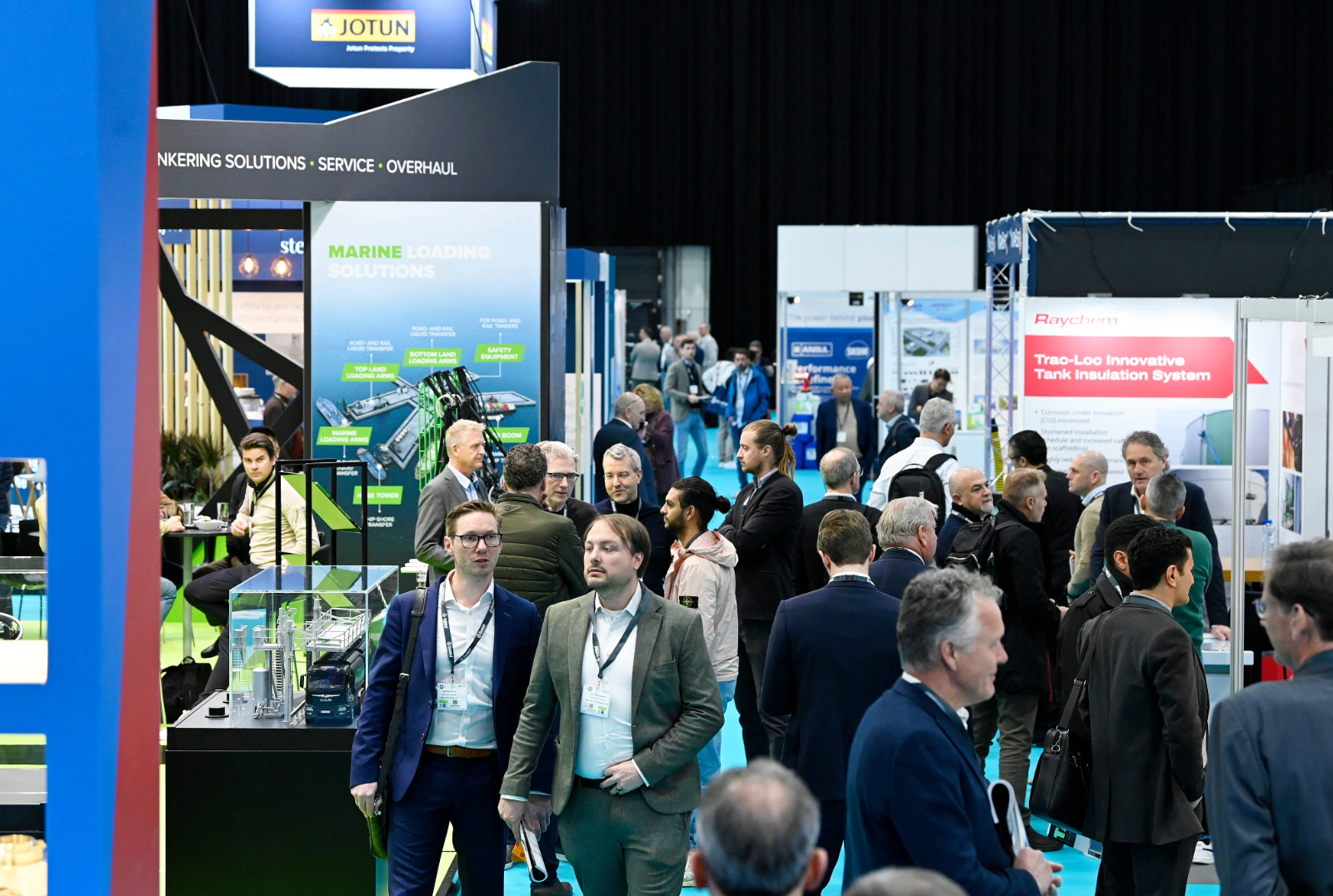
This is exactly why “Fuelling Global Collaboration” has been chosen as the theme for StocExpo 2026, bringing the international tank storage community together in Rotterdam to share insight, challenge assumptions, and explore how terminals can stay resilient in a rapidly changing market.
The risk of replacing one dependency with another
The events of the past few years have shown how quickly energy supply routes can shift, and how important it is for Europe to maintain diversity of supply. One clear example can be seen in the energy sector following the decoupling from Russian energy supplies. Parts of Europe have had to diversify energy sources from elsewhere, notably from different Middle East suppliers, while also pivoting toward the United States. This is international collaboration in action, but it also provides a cautionary tale. When trying to replace dependencies, it is difficult not to fall into the trap of replacing one dependency with another dependency.
That challenge will not disappear as the transition progresses. In fact, it may become more complex. If you switch away from fossil fuel dependencies, you move into a different set of dependencies, whether that is for imports of renewable fuels, imports of renewable energies, or critical raw materials needed to build renewable energy generation equipment. It will always be difficult to remain independent, and in a contested global environment, maximising diplomacy and maximising diversity of trade routes means outreach globally to different parts of the world.
Collaboration as a way to accelerate learning
Preparing for future fuels is one of the areas where international collaboration becomes particularly valuable. In this context, collaboration is not only about trade routes, but also about learning. It is about seeing what developments are happening in different parts of the world and understanding how the energy transition is progressing in different regions. It is about asking what best practices can be taken from elsewhere, what can be applied to a European context, and what cannot.
There is real value in looking at similarities and differences. What are the areas rich in solar energy doing, and can it be replicated in the south of Europe? What are the regions with specific geographies or geologies doing for CO2 capture or hydropower, and how could that apply to Europe? These are the kinds of questions that cross-border engagement helps answer. It allows the industry to learn faster, avoid repeating mistakes, and identify where opportunities are emerging.
Regulation and the need for alignment
Regulation is another area where collaboration matters, but also where barriers can be very real. Within the European Union, the European Commission provides a regulatory framework designed to alleviate barriers and create coherence. Even so, obstacles remain. One example is the difficulty of transporting CO2 across borders, which can be very difficult or even impossible due to definitions of waste and the rules around what can and cannot be transported. These issues are now starting to be solved by the legislature, but they highlight how regulation can slow cross-border infrastructure development if it is not aligned with the realities of the transition.
Outside of Europe, the picture is less consistent. It is difficult to see in other jurisdictions such a strong energy transition policy framework as in Europe, with China being a notable exception. There has been a rollback in the approach to the energy transition globally in some regions, and that uneven pace creates additional complexity for companies operating internationally.
Safety and resilience without borders
Safety remains the constant that underpins every conversation in tank storage. In this sector, safety is the highest priority because it is about people’s lives and wellbeing. Terminals handle dangerous and hazardous products on a daily basis, but the industry has the know-how and experience to do this safely, alongside a commitment to continually improve. When speaking to heads of terminals across Europe, the issue that keeps them up at night is always safety, and ensuring their workforce is safe.
Global collaboration plays an important role here, particularly through learning from incidents that happen in other parts of the world. If an incident occurs on a jetty in Singapore, the key question becomes why it happened, what was learned by authorities and companies as a result, and how those learnings can be taken on board elsewhere. That is how international collaboration can strengthen safety culture, by ensuring lessons are shared widely rather than remaining local.
Building the future together
Looking ahead, it is difficult to identify a single area of tank storage that will benefit from deeper international collaboration, because the entire sector is deeply embedded in international trade. Collaboration already exists in establishing trade routes, in understanding what future products will be traded, and in identifying where they will come from and how they will be transported. There is also significant collaboration in areas such as sanctions compliance, knowing the product, knowing the vessel, and ensuring customs compliance.
Perhaps most importantly, there is still no definitive choice made about what the fuel of the future will be. That uncertainty means the sector is preparing for multiple outcomes at once. In that context, engagement and dialogue are always better than working in isolation. Listening to how people in different jurisdictions are approaching the same challenges, and understanding why they make the decisions they do, is one of the most valuable forms of collaboration the industry can have.
These are exactly the kinds of conversations the industry will continue to advance at StocExpo 2026, where terminal operators, regulators, technology providers, and global supply chain partners will come together to strengthen cooperation and shape the future role of storage in a rapidly evolving energy system.