Who we are

Associations

Useful information

Monthly newstream newsletter.

Who we are

Useful information

Registration now open.

Become an exhibitor

Already exhibiting?

More opportunities:

Discover StocExpo

Getting here

What's on ?

Pitch lunch

Tank Storage Awards

Exclusive VIP tour

Discover the exhibitor Hub:

Discover an array of products and services…
Stay informed with the latest Exhibitor News….
Delve into a wide array of career prospects…

Discover the Vault

From oil and gas, LNG, tank terminals, biofuels, renewables & the energy transition…..

Watch the highlights of StocExpo 2023 and subscribe to our YouTube channel.

The latest news in the tank storage and energy infrastructure industry.

Showcasing our women in tank community, in collaboration with Tank Storage Magazine.

Exhibitor Spotlight: Teqplay

What are the most common forms of hidden waste you uncover in the port calls you monitor for your clients?

The most common hidden waste we uncover is underutilised berth capacity and unseen waiting time, which directly leads to lost throughput.

What we often see is time loss that everyone just accepted as the cost of doing business, because it isn’t measured properly. Extended anchorage waiting due to inaccurate ETAs, misalignment between vessel arrival and berth readiness, delays in pilot or tug scheduling, cargo not being fully ready, or documentation flowing too slowly…

Individually, they may seem minor. But when you structure every operational milestone into verified timestamps and compare planned versus actual performance, you start to see clear potential for improvement. You turn “normal delay” into measurable waste. Once it’s visible, ports & terminals can proactively address it instead of reacting case by case.


Can you share a concrete example where your real‑time data, ETA/ETD predictions and alerts significantly reduced delays or risk in a port call?

A clear example is when vessels are automatically called in and proceed directly toward the port area, even if the berth is not yet available.


In Rotterdam, for instance, a vessel may sail in, nautical services are arranged and need to be paid for, but if the berth is still occupied, the vessel cannot proceed. This creates a double cost.


With our real-time monitoring and predictive ETA insights, this risk can be identified in advance. Around three hours before arrival, the local agent can be notified with an updated arrival forecast and berth status check. If the berth is confirmed available, the call proceeds as planned. If not, nautical services can be placed on hold and the vessel speed can be adjusted to avoid unnecessary service costs.


The same applies to surveys. Cargo and bunker operations often depend on surveyors being present immediately upon arrival. If surveyors are not aware of the vessel’s arrival, they will be late, which delays the start of operations. By providing accurate, real-time ETA updates and alerts, surveyors and terminal teams can align their readiness, reducing idle time at berth and accelerating cargo handling.


In both cases, the combination of predictive ETAs and timely alerts reduces avoidable cost, prevents operational friction and protects overall port turnaround performance.

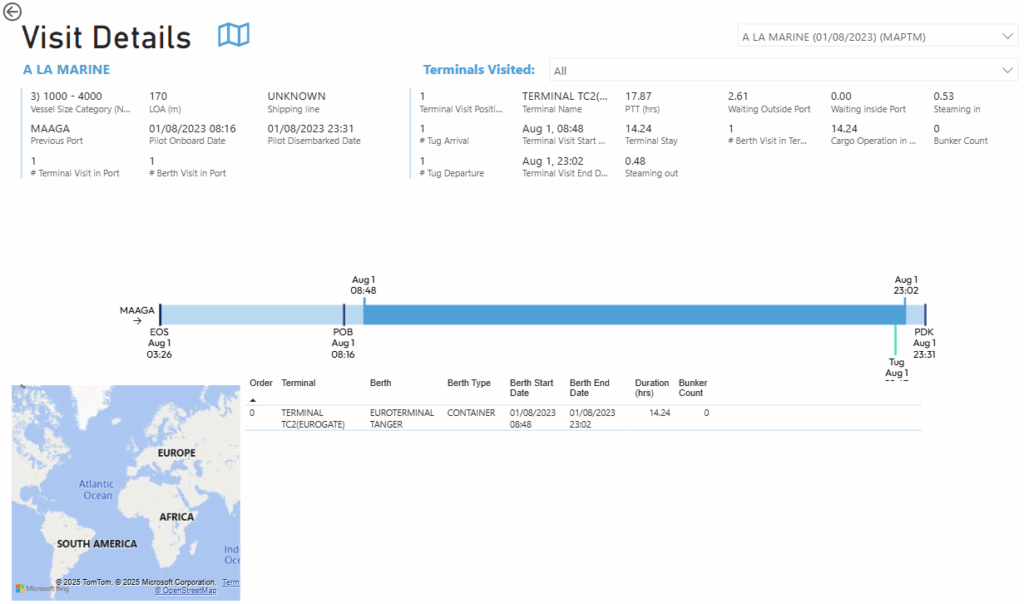
vessel visit timeline
 

How does combining port monitoring, marine planning, vessel matching and e‑SOF & timestamps in one ecosystem change day‑to‑day decision‑making for maritime professionals?

It changes the mindset from reactive to proactive.

Traditionally, port monitoring, vessel planning and documentation all sit in separate systems or spreadsheets. By bringing live vessel tracking, predictive ETAs, terminal capability data, vessel suitability checks and structured e-SOF timestamps into one ecosystem, everyone works from the same operational truth.

That means decisions are made on real-time data, not assumptions. Deviations are managed as they happen instead of reconstructed afterward. Charterers and terminal operators can coordinate based on a shared view of reality, which dramatically improves alignment and reduces friction.

How are your benchmarking and performance dashboards for terminals, ports and vessels being used in practice to speed up port turnaround and improve competitiveness?

If you don’t measure, you can’t improve.

Measuring performance & benchmarking is powerful because it creates an objective measurement framework for stakeholders.

Once everyone agrees on the performance indicators, avoidable waiting time can be clearly identified, quantified and systematically reduced. What was previously seen as “part of the process” becomes visible as measurable loss, and that transparency translates directly into financial return through shorter turnaround times and reduced demurrage exposure.

It also provides a neutral baseline for discussion. With benchmarking, maritime stakeholders can use objective data to quantify the cost of misalignment and agree on shared improvement targets. That alignment is what ultimately drives faster port calls and stronger competitive positioning.

 
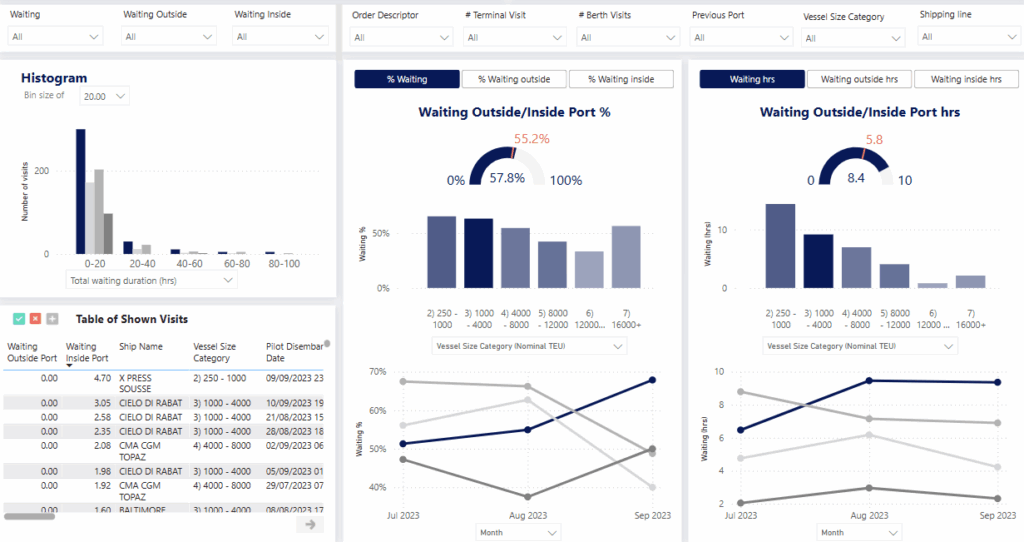
detailed dashboard

Share this article

How does aligning with standards such as DCSA, ITPCO, TIC4.0 and Global Maritime Forum make your solutions more interoperable and future‑ready for your clients?

Setting industry standards is essential because they create a common foundation for collaboration. They create room for constructive discussions between stakeholders and establish the basis for building interoperable digital solutions that truly improve efficiency. We actively support initiatives such as DCSA, ITPCO, TIC4.0 and the Global Maritime Forum because standardisation is a prerequisite for scalable digitalisation.

Alignment with recognised industry standards ensures that system integration is smoother, reduces disputes around event definitions or timestamps, and ensures clients are not locked into proprietary formats. As digitalisation accelerates and sustainability reporting becomes more important, interoperability becomes critical.

By building in line with global standards, we make sure our clients can adapt to new workflows and regulatory requirements without rebuilding their digital foundations.

Across markets such as oil and gas, minerals and mining, agriculture, and chemicals, where do you see the biggest opportunity for data‑driven port call optimisation next, and how are you preparing for it?

The biggest opportunity is in sectors where margins are tight and port inefficiencies directly impact working capital; particularly energy, chemicals and bulk commodities.

These markets often operate in infrastructure-constrained hubs where even small improvements in berth planning, waiting time reduction or cargo sequencing can unlock significant value. There’s also growing demand for emissions transparency and ESG-linked performance tracking, which makes structured port call data even more important.

We’re preparing by strengthening predictive analytics, expanding structured e-SOF adoption, and continuously enriching our global benchmarking dataset. Beyond visibility, the next step in port optimisation is coordinated, data-driven decision-making, enabling the entire maritime ecosystem to address inefficiencies individually or in collaboration.

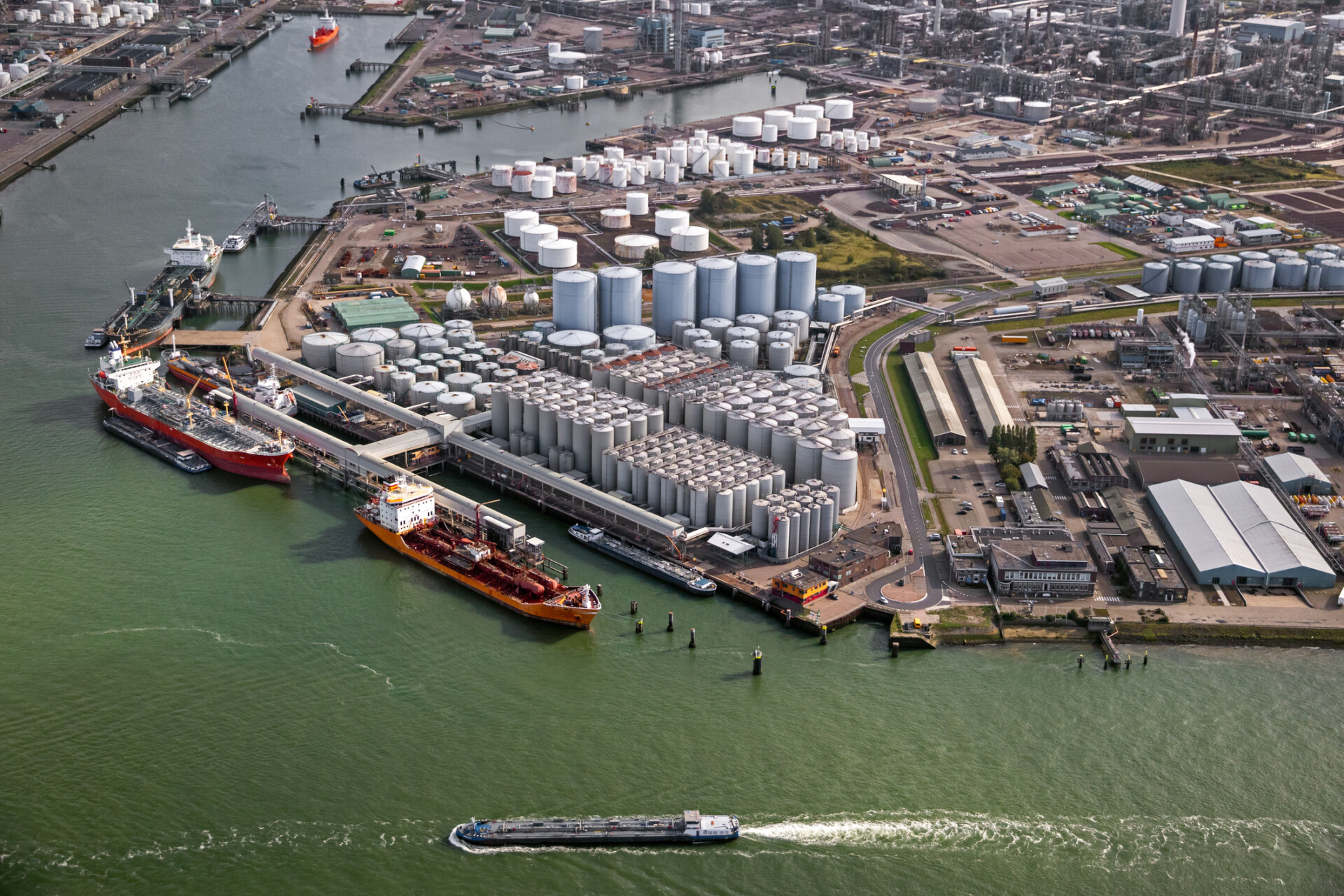
petrochemical industrial port

Register to attend.

Get social.

#stocexpo #futuredelivered