In collaboration with Andrea Guati Rojo, Policy & Advocacy Manager, Ammonia Europe
Unlock the secrets behind designing safe, efficient ammonia terminals essential for the energy transition. Discover how technical expertise, operational readiness, and commercial strategy must unite to tackle ammonia’s unique challenges.
Ammonia is becoming a key player in the energy transition, but designing terminals for its storage and handling requires more than market forecasts. Europe can build on decades of ammonia storage and handling experience in the fertiliser and chemical sectors as terminals adapt to new energy and maritime opportunities. Due to its complex properties, safety demands, and operational challenges, organisations must carefully evaluate technical, commercial, and workforce readiness before investing in infrastructure.
Product handling, safety and terminal design considerations
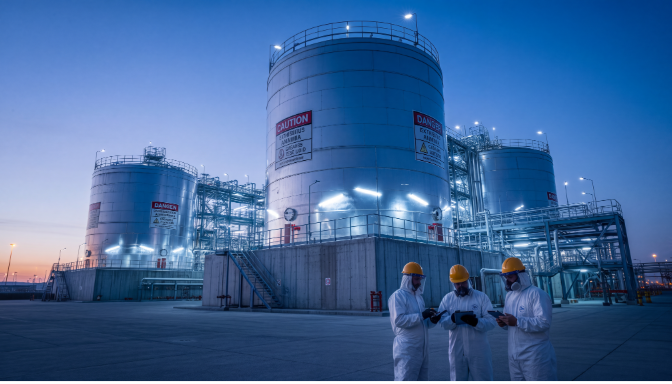
Ammonia is a colourless, toxic, corrosive gas with a pungent odour, liquefying at approximately −33°C under atmospheric pressure, or stored as a liquid under pressure at ambient temperature. Its toxicity requires strict exposure limits and careful planning to protect workers and surrounding activities in the event of a release. This necessitates specialised terminal designs such as refrigerated atmospheric-pressure storage tanks and robust containment to prevent leaks and environmental harm. Safety systems include continuous gas monitoring, emergency shutdown valves, and fire response scaled to storage volume. Operating procedures enforce strict handling protocols, personal protective equipment, and thorough training. Emergency plans define evacuation zones and neutralisation methods for rapid incident response. Ammonia’s corrosiveness influences material choices, avoiding copper alloys and favouring compatible steels and elastomers. For maritime applications, safe transfer interfaces between terminals, bunker vessels and receiving ships are also essential. These factors collectively ensure safe, reliable terminal operation.
Operational capability and workforce readiness
Managing ammonia terminals requires a skilled, well-trained workforce. Operators must be proficient in handling procedures, emergency response, and personal protective equipment use. Training covers chemical properties, leak detection, transfer protocols, and safety regulations to enable quick risk mitigation. Continuous education is essential to maintain operational readiness amid evolving standards. Organisations should cultivate a safety culture where every team member understands their role in incident prevention. Collaboration among technical, safety, and operational teams enhances preparedness. The 2025 ammonia bunkering demonstration at the Port of Rotterdam is one example of how practical industry collaboration is helping ports prepare for new ammonia applications. Investing in competency development protects personnel, ensures regulatory compliance, and boosts operational efficiency, forming a foundation for successful ammonia terminal management.
Existing asset adaptation versus new infrastructure
Retrofitting existing terminals for ammonia storage can save costs and time but poses challenges. Ammonia’s toxicity, corrosiveness, and low-temperature storage needs require stringent safety measures and specialised equipment. Modifying existing tanks and pipelines to meet these standards can be costly and complex, and legacy infrastructure may lack capacity or flexibility. Conversely, new dedicated ammonia terminals allow purpose-built designs with advanced safety features, modular construction, and integration with ammonia cracking or hydrogen production. Innovative solutions like Gravity Based Structures (GBS) could offer compact offshore or nearshore storage options, subject to site-specific safety and environmental assessments. Connecting future terminals to existing industrial sites and port logistics networks can also help make more effective use of established infrastructure. The choice depends on thorough assessments of technical feasibility, safety compliance, operational readiness, and commercial viability, requiring collaboration across technical, safety, and commercial teams.