By Peter Kerkhof, EEMUA
Maintenance in the tank storage sector has never been a simple subject. Despite its critical importance, it is often underestimated, misunderstood, and approached in a conservative way. For many years, tank maintenance has been seen as old-fashioned, not an obvious space for innovation or digital transformation. Yet this perception is increasingly misaligned with the realities terminals face today. Storage tanks are complex assets. They are large, long-lived, and difficult to inspect and maintain. Engineers quickly learn that maintaining tanks is far more intricate than maintaining most other pieces of equipment. While a cautious approach is understandable, excessive conservatism can prevent progress.
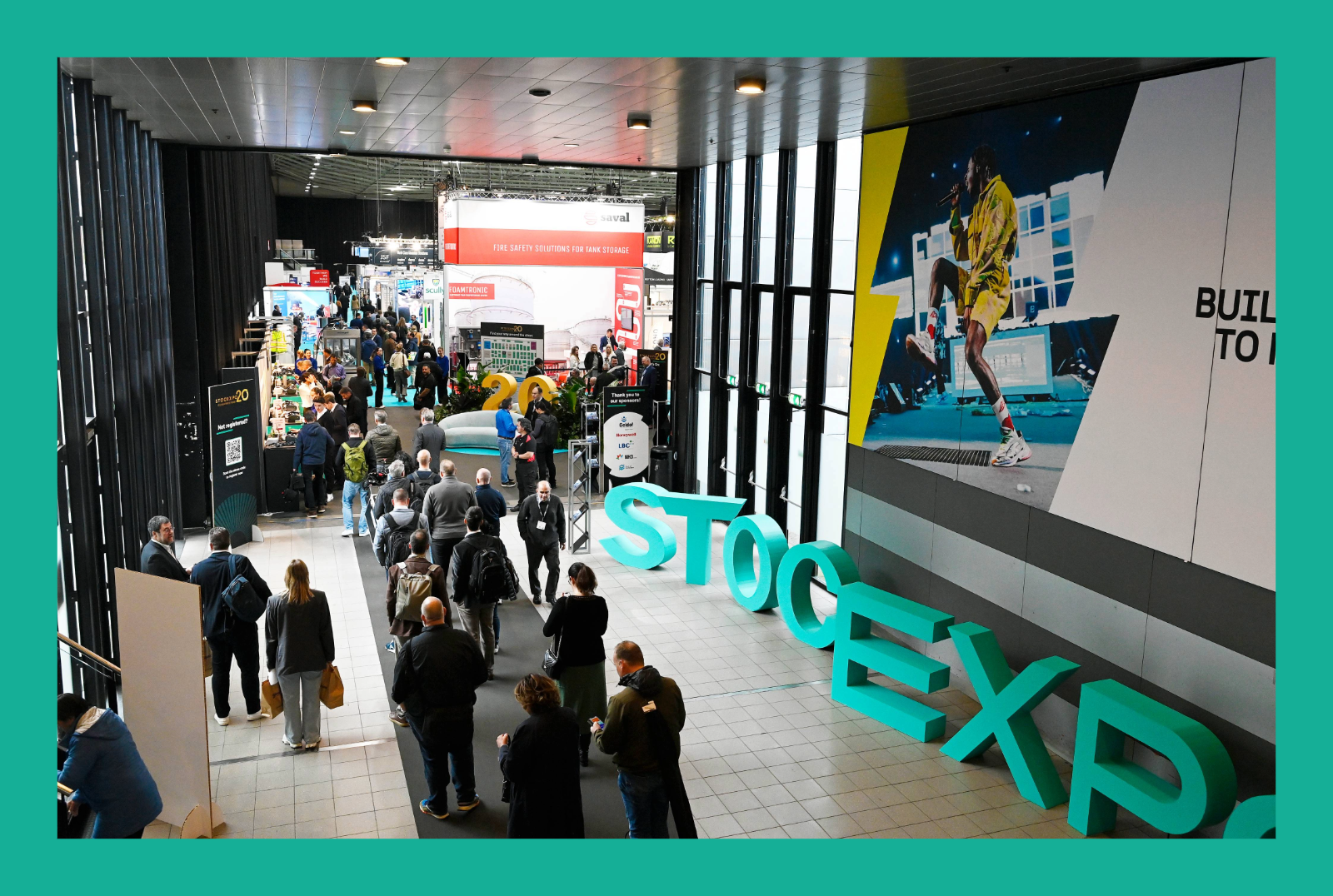
As the industry prepares to come together at StocExpo 2026, where asset integrity, maintenance strategy, and digitalisation will be central themes, these questions around how terminals manage and maintain critical infrastructure are becoming increasingly urgent.
Today, however, that mindset is beginning to shift. New inspection techniques, improved welding methods, robotics, and risk-based approaches are being adopted, albeit gradually. More operators are recognising that maintenance must evolve if terminals are to remain safe, reliable, and economically viable in a changing energy landscape.
Maintenance as a strategic decision
One of the fundamental challenges lies in how maintenance is perceived at management level. Tank maintenance is expensive, and explaining those costs is not always straightforward. Senior leaders often question why significant capital is allocated to tanks rather than to pumps, piping, or automation systems. Answering that question convincingly requires experience and a clear understanding of how maintenance decisions affect long-term integrity and risk.
This is where predictive maintenance begins to matter. Management increasingly wants visibility on what lies ahead, not just what has failed in the past. They want insight into future maintenance activities, capital requirements, and asset life expectancy. Predictive maintenance is not primarily about technology. It starts with strategy. Operators must decide what they want from their assets. Are tanks expected to remain in service for five years, ten years, or twenty-five years? Those decisions should be made at leadership level and embedded in the organisation’s maintenance philosophy.
In the context of the energy transition, these questions become even more complex. Demand for some traditional products will decline over time. In that scenario, it may no longer make sense to invest in maintenance strategies designed to extend asset life for decades. At the same time, some tanks may be repurposed for new products with different corrosion, temperature, or contamination profiles. Strategic maintenance planning therefore must account not only for how long an asset will be used, but also for how its service conditions may change.
From data to decisions
One of the biggest barriers to predictive maintenance is knowledge. Defining and scoping maintenance work effectively remains a challenge across the sector. Scoping is one of the most critical phases of tank maintenance, yet it is also where uncertainty often drives conservative decisions. When information is limited, operators may opt for the most extensive and expensive maintenance scenario simply to reduce perceived risk. Replacing an entire tank floor, for example, may be chosen over targeted repairs even when it may not be strictly necessary.
Predictive maintenance aims to reduce this uncertainty. When operators have better insight into asset condition, they can make more informed decisions about what work is needed and when. Technology can support this process, but it must be applied with care. Artificial intelligence and machine learning rely on data, and many terminals are still developing their data collection and management capabilities. Without clear objectives, digital tools can reinforce conservative behaviour rather than enable better decisions. Human judgement remains essential. Technology should support engineers, not replace them.
Robotics offers promise, especially for inspections of tanks that remain in service. Robotic inspection can provide early indications of integrity issues and help predict future maintenance scope without immediately taking assets out of operation. Combined with advanced inspection techniques, this can significantly improve planning accuracy and reduce unnecessary downtime.
Skills, competence, and organisational change
The shift toward predictive maintenance also has important implications for people and organisations. Maintenance teams are increasingly expected to work with data, dashboards, and digital systems alongside traditional inspection and engineering tasks. This creates new skill requirements, but it does not reduce the need for deep technical knowledge of tank behaviour, materials, corrosion mechanisms, and construction practices. In fact, interpreting data correctly often requires more experience, not less.
Organisations must therefore consider how they develop and retain competence. This includes training engineers to understand both physical assets and digital tools, as well as ensuring that knowledge is transferred effectively between generations. As experienced specialists retire, capturing and codifying their expertise becomes increasingly important. Predictive maintenance depends as much on organisational learning as it does on technology.
Collaboration, standards, and the role of EEMUA
Digital tools such as sensors, asset management systems, and digital twins are valuable, particularly for managing large tank portfolios. However, they are not shortcuts to predictive maintenance. Strategy must come first. One of the most significant economic levers in tank maintenance is the cost of cleaning. For some products, cleaning can represent up to half of total maintenance costs. Risk-based inspection, robotic assessment, and improved integrity evaluation can allow operators to extend service intervals and reduce both cost and environmental impact.
Collaboration across the industry is essential if predictive maintenance is to mature. Operators, EPC contractors, technology providers, and regulators are all still learning how best to apply new approaches. While the industry is often labelled conservative, serious integrity failures remain relatively rare. When incidents do occur, their consequences are significant. It is therefore crucial to understand root causes accurately and avoid regulatory responses that do not reflect actual risk.
From a standards perspective, EEMUA continues to adapt its guidance to reflect innovation while maintaining a strong focus on safety. The latest edition of EEMUA 159 includes new content on robotic inspection, and complementary publications address statistical approaches to inspection data. Predictive and probabilistic preventive maintenance are already embedded within existing guidance, although broader adoption and deeper understanding are still needed. Training and competence development will be increasingly important as maintenance teams balance digital skills with deep engineering knowledge.
The conversation continues at StocExpo
These challenges and opportunities are not theoretical. They are being actively discussed by the industry, including at StocExpo, where maintenance, asset integrity, and digitalisation remain central themes. Events such as StocExpo provide a vital platform for operators, engineers, regulators, and technology providers to share experience, challenge assumptions, and learn from one another. They also help ensure that innovation is grounded in operational reality rather than driven by technology alone.
Looking ahead, the most significant changes may come not from technology itself, but from shifts in mindset, organisation, and governance. Clear roles, strong leadership, effective contractor management, and shared accountability are just as important as inspection tools or data platforms. Many incidents during maintenance and construction can be traced back to gaps in competence or oversight rather than technical failure.
Maintenance is a deceptively simple term that hides enormous complexity. To move from reactive to predictive maintenance, the tank storage industry must embrace strategic thinking, collaboration, and continuous learning. At EEMUA, our role is to bring people together, support the exchange of experience, and develop guidance that reflects both innovation and operational reality. Predictive maintenance is still evolving, but with the right leadership and cooperation, it can become a cornerstone of safer, more efficient, and more sustainable terminal operations.