Watch the highlights of StocExpo 2023 and subscribe to our YouTube channel.
The latest news in the tank storage and energy infrastructure industry.
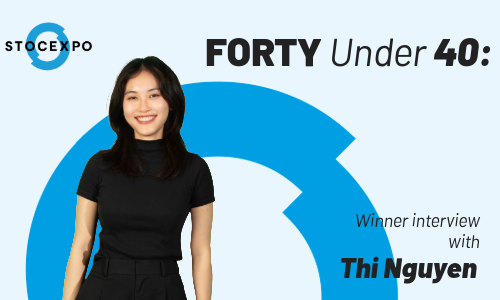
Showcasing our women in tank community, in collaboration with Tank Storage Magazine.
Why do you think celebrating young talent in the industry is important
Working in a company whose mission is to transform how coatings are applied, I have a front-row seat to witness one of the most traditional processes of our industry at a turning point. The energy transition, digitalisation, and increasingly complex regulatory landscapes are rapidly shaping what this sector needs to look like in the upcoming two decades. Adding to the pressure is a growing labor shortage, particularly in the maintenance workforce needed to keep ageing infrastructure operational and new capacity coming online. As a result, celebrating young talent matters because visibility creates momentum. When emerging professionals see peers being recognised for meaningful contributions, it signals that this is an industry worth investing a career in. For young people who still have 40 years in the labor workforce, a sense of purpose in their work is equally, if not more, important than financial motivation alone.
On a personal level, I know how much it means early in your career to feel that your work is seen. Recognition accelerates confidence, and confidence accelerates impact. And that effect shouldn’t stop only at one’s own organisation. The industry as a whole benefits the most when it echoes the same mindset. This results in a network of talented people where we can connect driven young professionals across companies and disciplines. That is how you get the cross-pollination of ideas that moves an industry forward. Ultimately, the Forty under 40 list does something practical: it makes talent visible to the organisations and opportunities that can amplify it. That’s good for individuals, good for a company and good for an industry that needs to attract and retain the best people to navigate what’s ahead.
What has been your biggest challenge to date?
My biggest challenge has been building a career in a new country, where it is quite hard to hear people pronounce my name right the first time, while simultaneously navigating a traditionally conservative industry. On a personal level, the visa process and the practicalities of relocating are demanding in ways that are easy to underestimate. From my perspective, it takes real energy and focus that you’d otherwise direct entirely at your work. Professionally, as a marketeer, the greater challenge has been learning to communicate effectively across different working cultures as we are a team with 14 different cultural backgrounds, and finding the right way to introduce new ideas to an industry that has operated a certain way for decades.
At Qlayers, we are fundamentally challenging how coating work is done, transitioning away from manual labor toward autonomous robotic systems, so the ability to bring conservative stakeholders along on that journey is not a soft skill, it’s a core part of the job. That challenge extends to internal communications as well. It takes deliberate effort to shift the team’s mindset away from seeing ourselves purely as disruptors. What we are doing is indeed unprecedented. But rather standing apart as a “disruptor”, I believe it is more powerful to position ourselves as a pioneer: one that brings the industry forward with us, helping stakeholders see and share in the vision, rather than feeling challenged by it. What this challenge taught me is that patience, adaptability, and genuine curiosity about how others think are often more powerful than the best technical argument.
What advice do you have to pass on to the next generation?
It is extremely important now to guard your ability to do critical thinking. We are living through a period of extraordinary technological change, and AI is reshaping almost every profession, including ours. But the professionals who will thrive are not necessarily those who has the most AI tokens, they are the ones who develop enough depth in their field to know exactly what to ask, and the critical thinking and knowledge to distinguish valuable insight from convincing noise. We should never outsource our judgement, memory and thinking ability.They have to be built, deliberately, through real experience, continuous learning, and idea exchange with your peers. And finally: protect your creative outlet. This industry demands a lot, and the pressure to always be productive can quietly erode the parts of yourself that make you interesting, resilient, and original. Whether it is art, music, sport, or anything in between, a hobby that has nothing to do with work is not a luxury, it is what keeps you whole, to stay connected, and often where your best ideas quietly take shape.
If you could fly to any country tomorrow, where would you go and why?
Definitely to Vietnam because there is no place like home.
What’s the best piece of advice you’ve ever received?
You should make it happen first and then you can make it perfect later
What’s one thing you’re really passionate about outside of work?
Painting
If you could switch lives with someone for a day, who would it be?
Probably me in the next 5 years just to see where I am at. If she is happy, I can ask her for advice. If she’s not, I will make sure that we will not end up in that route.