Who we are

Associations

Useful information

Monthly newstream newsletter.

Who we are

Useful information

Registration now open.

Become an exhibitor

Already exhibiting?

More opportunities:

Discover StocExpo

Getting here

What's on ?

Pitch lunch

Tank Storage Awards

Exclusive VIP tour

Discover the exhibitor Hub:

Discover an array of products and services…
Stay informed with the latest Exhibitor News….
Delve into a wide array of career prospects…

Discover the Vault

From oil and gas, LNG, tank terminals, biofuels, renewables & the energy transition…..

Watch the highlights of StocExpo 2023 and subscribe to our YouTube channel.

The latest news in the tank storage and energy infrastructure industry.

Showcasing our women in tank community, in collaboration with Tank Storage Magazine.

Iraq’s oil exports halved by Hormuz bottleneck, threatening economic collapse

Iraq’s oil exports have been slashed by more than half due to the Strait of Hormuz bottleneck, pushing its economy to the brink of collapse. Discover how this critical chokepoint threatens global oil markets and what it means for energy security worldwide.

Imagine a vital artery suddenly blocked, cutting off the lifeblood of a nation’s economy. This is the stark reality Iraq faces as the closure of the Strait of Hormuz slashes its crude oil exports from 3.4 million barrels per day to just 1.5–1.7 million. The impact is immediate and severe: the country’s oil-dependent economy teeters on the brink of collapse.

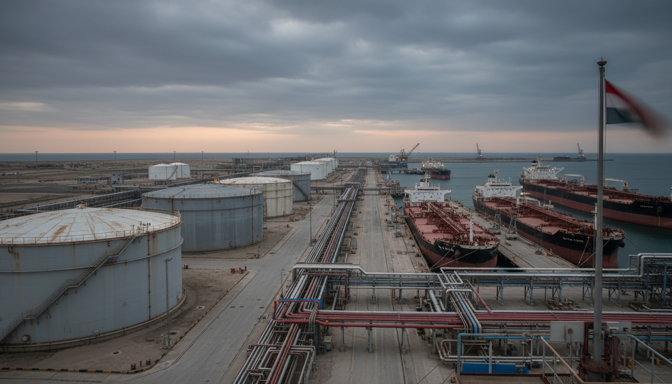
Iraq’s oil exports, which fund over 80% of public spending including salaries and subsidies, have been halved, draining state coffers at an alarming pace. Production has been cut urgently to around 2.7 million barrels per day, but storage tanks are rapidly filling as tankers are unable to pass through the blocked strait. Unlike other Gulf countries with alternative export routes, Iraq’s geography leaves it trapped, reliant almost entirely on southern terminals near Basra.

The government is scrambling to diversify export routes, reviving long-stalled projects like the Basra-Aqaba pipeline to Jordan’s Red Sea port and a strategic pipeline to Turkey’s border. Yet these are long-term solutions, requiring years to build. In the short term, Iraq’s options are limited to the existing Kirkuk-Ceyhan pipeline and costly, risky overland transport through Syria. This bottleneck at Hormuz not only disrupts Iraq’s economy but also highlights the fragility of global oil supply chains, especially as the strait handles a significant portion of the world’s oil trade.

Despite the crisis, domestic fuel supplies remain stable thanks to local refining. On the gas front, Iraq continues efforts to reduce flaring and develop its own fields, awarding contracts to international companies. However, without oil revenues, foreign investment risks drying up, threatening long-term energy development and economic stability.

The closure of the Strait of Hormuz has also sent ripples through global oil markets. Oil prices have rallied amid the uncertainty, with Brent crude climbing above $82 per barrel as hopes for a US-Iran deal fade, prolonging the geopolitical tensions that underpin the blockade [[2085ebb7]]. Experts warn that even if the strait reopens, it could take at least six months for trade to return to full capacity, prolonging the economic strain on Iraq and other Gulf producers.

If the Strait of Hormuz remains closed, Iraq faces deeper production cuts, devastating budget deficits, and escalating social instability. The government’s ability to maintain internal stability under these conditions will be tested severely. For terminal operators and storage professionals in Europe, this disruption underscores the critical importance of alternative logistics and storage strategies to mitigate geopolitical risks.

The situation calls for vigilance and proactive planning. Stakeholders must assess their exposure to Middle Eastern supply disruptions and explore diversification of sources and routes. The Iraq case is a powerful reminder that energy security hinges not only on production but also on resilient export infrastructure and geopolitical stability. Now is the time to prepare for volatility and safeguard operations against cascading impacts from such chokepoints.

Share this article

iraq’s oil exports halved by hormuz bottleneck, threatening economic collapse

Register to attend.

Get social.

#stocexpo #futuredelivered

StocExpo on-demand content

Access the StocExpo on-demand content from 2026.

At Easyfairs, we take your privacy seriously and will only use the information we collect or receive about you in accordance with our privacy policy. If you change your mind you can unsubscribe at any time.